The Kitchen Teapot Used to Test Computer Graphics
Martin Newell turned a household teapot into a digital model in Utah. The original pot is now in California’s Computer History Museum.
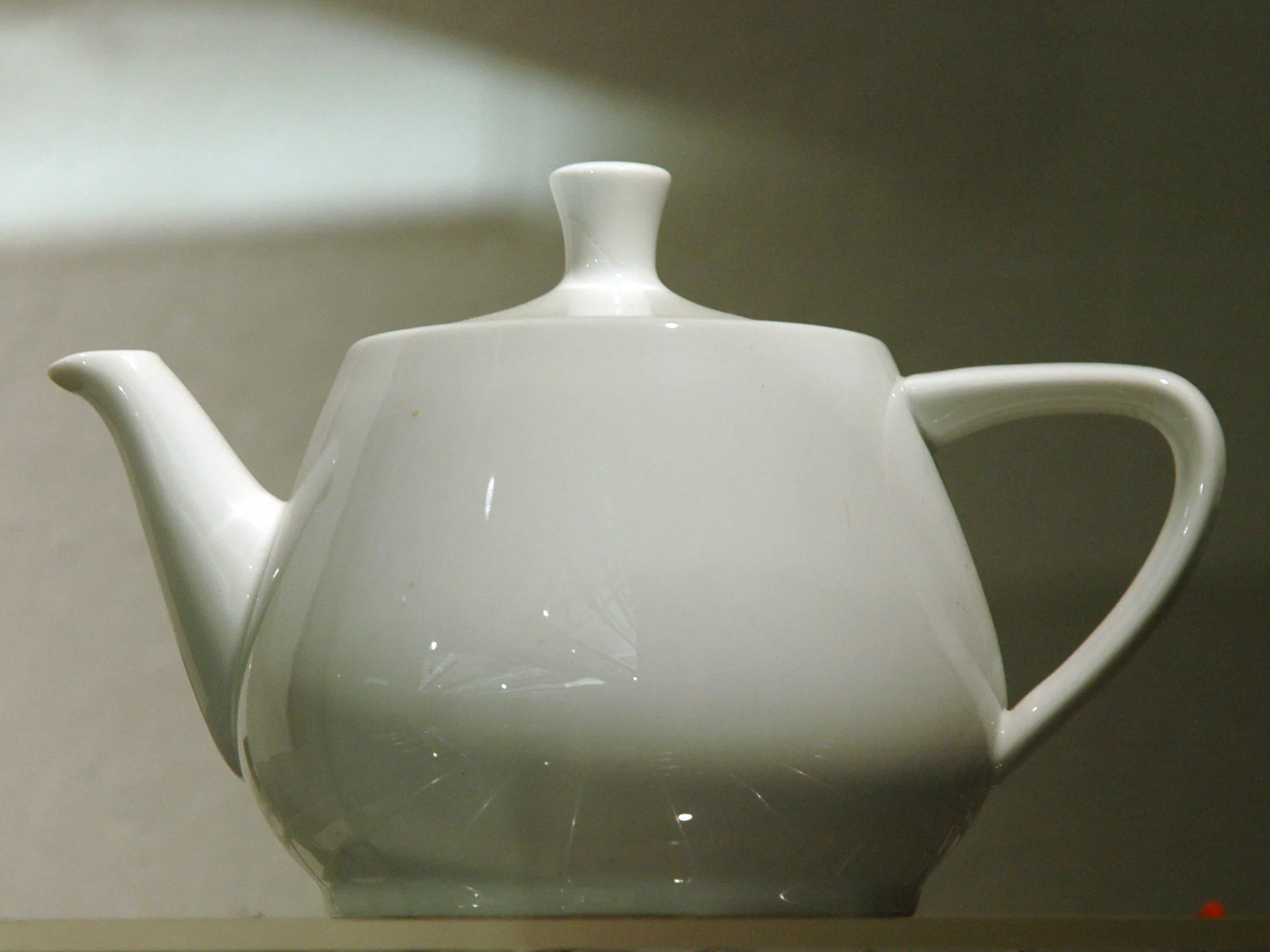
The white Melitta teapot in the Computer History Museum looks like an ordinary kitchen object because that is what it was. In 1975, University of Utah researcher Martin Newell used it to create a mathematical model that other computer graphics researchers could reuse.
Drawing the Curves
Newell needed a useful object for experiments with curved surfaces. The teapot offered a rounded body, a lid, a spout, and a handle, all joined in one recognizable shape. Some parts hid others from view, and the surfaces could cast shadows on one another.
He sketched its form on graph paper and entered coordinates by hand. Those numbers described surfaces a computer could work with. A program could then generate an image of the object from a chosen viewpoint, with different lighting or surface properties.
Using the same model repeatedly made comparisons easier. Researchers could concentrate on how a rendering method handled a curved rim, a shadow, or a reflection without first inventing a different object for every experiment. The teapot circulated through research and software demonstrations until its silhouette became familiar far beyond Utah.
Why the Digital Pot Is Shorter
Jim Blinn used the teapot to demonstrate texture and reflection at the SIGGRAPH computer graphics conference in 1976. The model offered a common subject for techniques that could otherwise be hard to compare, and its use spread through the graphics community before sharing digital objects over the web became routine.
The standard digital teapot is squatter than the physical object. A frequently repeated explanation blames the shape of early computer pixels. Jim Blinn, who altered the model, has explained that he kept the shorter proportions because he preferred how they looked. Pixel shape had already been accounted for in his rendering system.
The physical teapot is held by the Computer History Museum in Mountain View. Its label connects an object bought for use at home with the development of computer-generated images. The original graph-paper drawing is also documented in the museum’s collection, preserving the hand work behind the model’s numerical coordinates.
Keep exploring
Take these stories with you.
Open Hidden Here to see the stories around you. Choose a place on the map, read what happened there, or listen while you explore. Optional nearby alerts can point out stories you might otherwise miss.
Discover thousands of stories across the U.S.
Create a free account to read the full stories and listen to five of them. Passport adds unlimited listening.
 See how Hidden Here works

Sources & photograph
Adapted from the Hidden Here story catalog. Explore the historical records behind this story.