Redwood City Built an Ocean Ship out of Concrete
Launched in 1918, the SS Faith tested whether reinforced concrete could help meet a wartime shortage of ships.
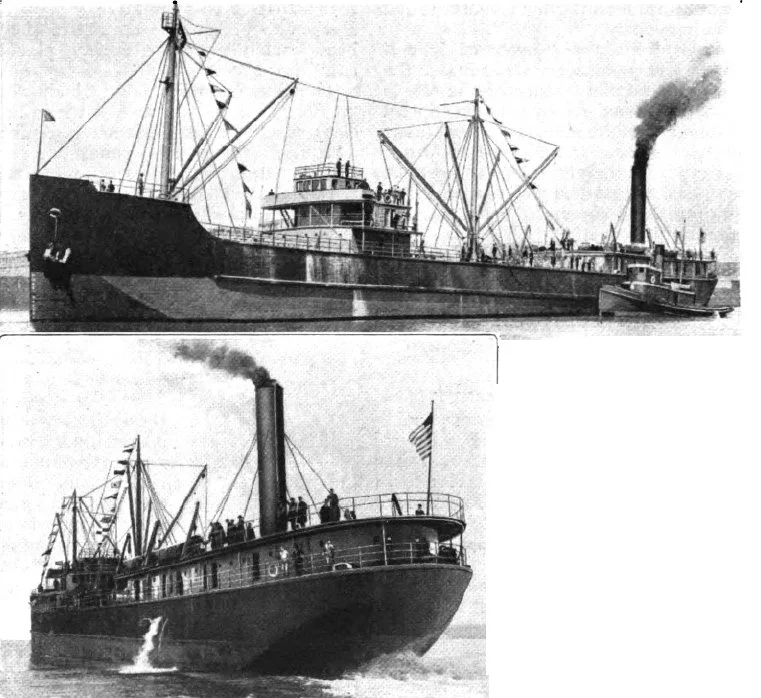
In March 1918, a 336-foot freighter slid into the water at Redwood City. Its hull was made of reinforced concrete. The SS Faith was built to carry ocean cargo at a time when wartime demand had put conventional shipyards under pressure.
A Shipyard on Redwood Creek
During World War I, merchant ships were being lost faster than they could easily be replaced. Steel was in heavy demand. William Leslie Comyn, a businessman with shipping interests, proposed using concrete for ocean-going vessels and established the San Francisco Shipbuilding Company to try it.
The work took place on Redwood Creek, south of San Francisco. Designers Alan Macdonald and Victor Poss developed the ship, and construction began in 1917. Workers built a reinforced framework and poured concrete into forms to produce the hull. By the following February, Faith was complete.
Concrete itself is heavier than water, but a hollow ship displaces a much larger volume of water than a solid block of concrete of the same weight. The hull’s shape and enclosed space allowed it to float with machinery and cargo aboard. The challenge was making that structure strong and watertight enough for service at sea.
A Short Commercial Career
Faith was steam-powered, with a reported speed of about ten knots. It carried commercial cargo after its launch, demonstrating that the proposal could work beyond a shipyard test. It was the first American ocean-going concrete ship, although concrete boats had already been built elsewhere.
The experiment arrived at an awkward moment. The United States pursued a larger concrete-ship program, but the war ended before those vessels could provide the wartime service originally envisioned. The urgent shortage that had made unusual building materials attractive was easing.
Faith’s own career lasted only a few years. By 1921 it had been taken out of service in Cuba.
Photographs published in 1918 show its masts, cargo gear, and funnel above a hull with the proportions of a conventional freighter. The ship’s unusual construction drew publicity while it was new, leaving a photographic record even though the vessel itself did not survive.
Keep exploring
Take these stories with you.
Open Hidden Here to see the stories around you. Choose a place on the map, read what happened there, or listen while you explore. Optional nearby alerts can point out stories you might otherwise miss.
Discover thousands of stories across the U.S.
Create a free account to read the full stories and listen to five of them. Passport adds unlimited listening.
 See how Hidden Here works

Sources & photograph
Adapted from the Hidden Here story catalog. Explore the historical records behind this story.