The Indiana Dune Sold to Glassmakers
Hoosier Slide was a landmark above Lake Michigan. Its sand was shipped to factories, including the makers of Ball jars.
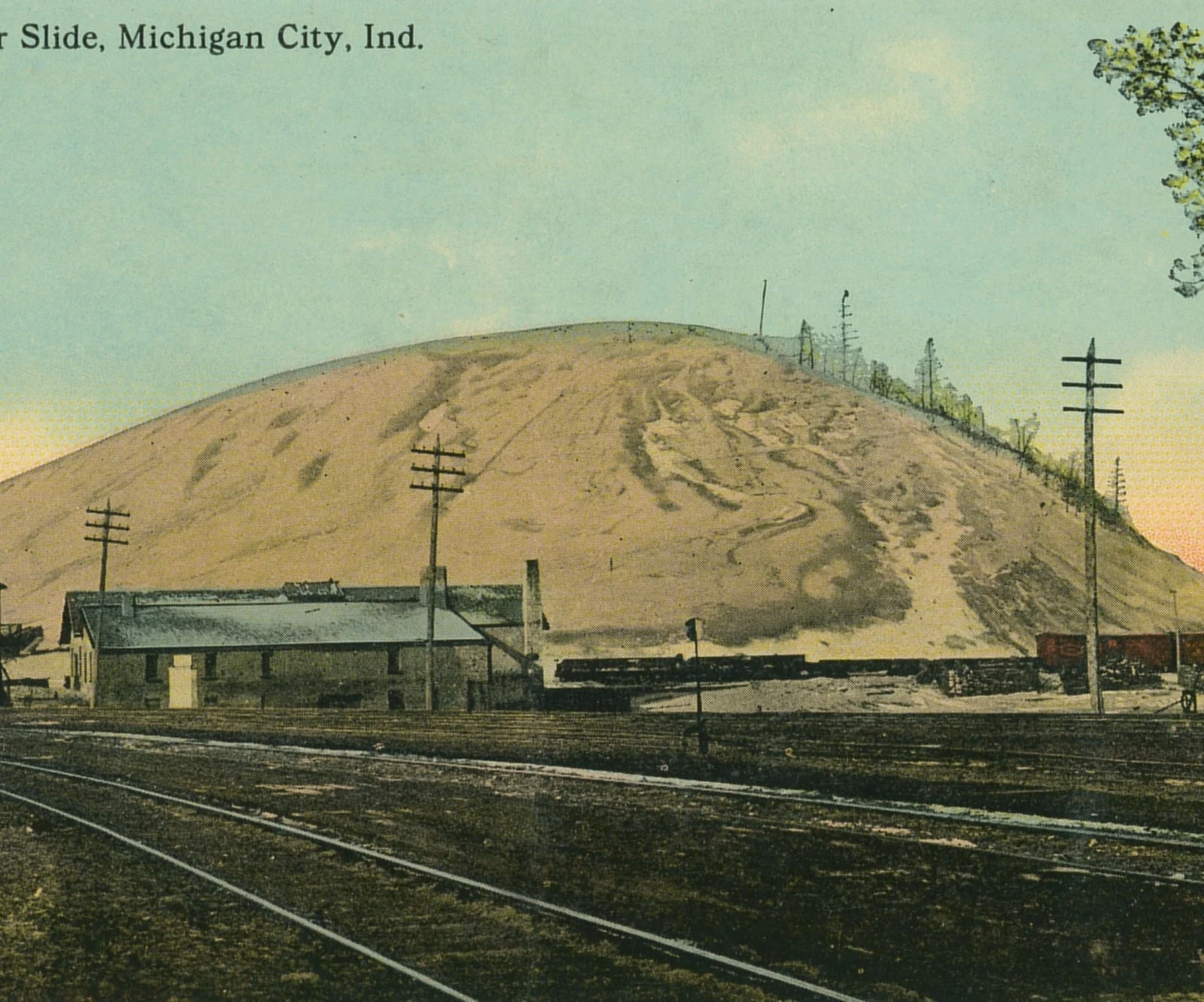
A large dune once stood beside Michigan City’s harbor, rising roughly two hundred feet above Lake Michigan. People climbed it, slid down its loose slopes, and photographed it from the waterfront. Within a few decades, it had been removed for its sand.
A Landmark at the Harbor
Hoosier Slide stood near the mouth of Trail Creek. Its height made it useful to sailors approaching Michigan City, and its position brought it close to the rail and water routes that carried visitors to the lakeshore.
Excursion passengers came to climb the dune and look across the lake. Old photographs and postcards show a broad sandy hill above tracks and industrial buildings. Warehouses, boats, and trains shared the waterfront with the dune.
Its sand also had commercial value. Glassmakers wanted the silica, and nearby transportation made it possible to ship large quantities away. Tourism and extraction occupied the same location before the mining finally consumed it.
Leaving by Freight Car
Industrial removal accelerated in the early twentieth century. Workers loaded sand for customers including Ball Brothers in Muncie and Pittsburgh Plate Glass. At first, much of the work was done with shovels and wheelbarrows. Machinery later increased the rate at which the dune could be dismantled.
Iron in the sand contributed to the blue-green tint associated with older Ball jars. The color that collectors recognize in those containers had a connection to material taken from this stretch of the Indiana shore.
The sand also went into telephone and telegraph insulators and foundry work. Railroad cars could carry it to several kinds of manufacturer.
By about 1920, the dune had been leveled. A power-generating station later occupied the former dune tract. There is no remaining slope there to climb, and the site should not be confused with the surviving dunes protected elsewhere along the lakeshore.
In the 1907 postcard, the dune rises behind the waterfront tracks. A later view from the same area would show the industrial buildings that replaced it.
Keep exploring
Take these stories with you.
Open Hidden Here to see the stories around you. Choose a place on the map, read what happened there, or listen while you explore. Optional nearby alerts can point out stories you might otherwise miss.
Discover thousands of stories across the U.S.
Create a free account to read the full stories and listen to five of them. Passport adds unlimited listening.
 See how Hidden Here works

Sources & photograph
Adapted from the Hidden Here story catalog. Explore the historical records behind this story.