Kool-Aid Began with a Shipping Problem
Edwin Perkins’s bottled fruit concentrate could break or leak in transit. In Hastings, he developed a powder that traveled in an envelope.
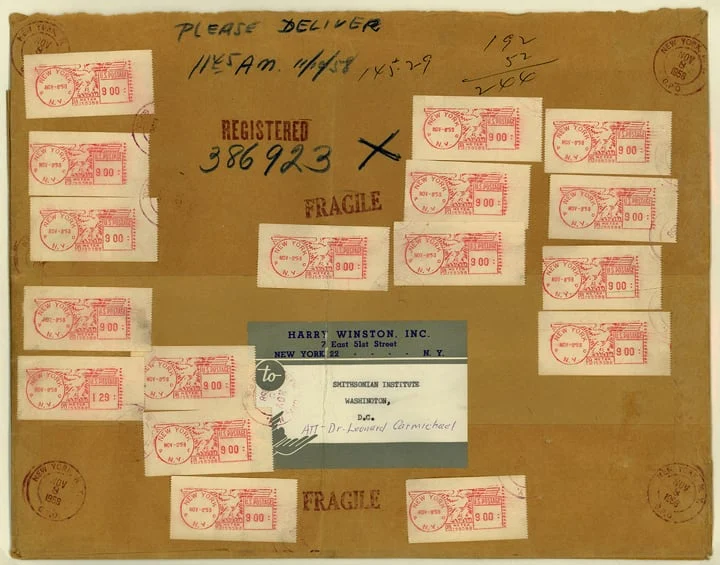
Before Kool-Aid came in paper packets, Edwin Perkins sold a concentrated drink called Fruit-Smack in glass bottles. The liquid had customers, but shipping it was troublesome. Bottles broke, concentrate leaked, and the glass added weight to every order.
Removing the Bottle
Perkins moved his business to Hastings in 1920 to be closer to useful distribution routes. Railroads and highways helped a company selling products beyond its immediate neighborhood. They did not solve the problem of sending a fragile bottle through the system.
Fruit-Smack came in six flavors. In 1927, Perkins developed a dry version that customers could mix with water. The new product was initially called Kool-Ade. Its ingredients included flavoring, coloring, acids, and dextrose, combined into a powder small enough to fit inside an envelope.
That change shifted part of the work to the customer’s kitchen. Water no longer had to travel with the flavor concentrate. The package could be lighter and less vulnerable to the accidents that spoiled bottled shipments.
Getting the Packet Right
The recipe was only part of the development process. Perkins also needed packaging that could hold the powder without contaminating it or opening in transit. One experimental paper released a black, tarry substance. Another failed to stay sealed.
A waxed-paper lining inside a colorful outer envelope eventually provided a workable package. Employees filled and sealed the early packets by hand. The product missed the summer of 1927, but the company began selling it through wholesalers the following year.
By 1931, the growing operation moved to Chicago. The familiar Kool-Aid spelling followed in 1934, according to the Hastings Museum’s chronology. The smiling pitcher and television character came much later.
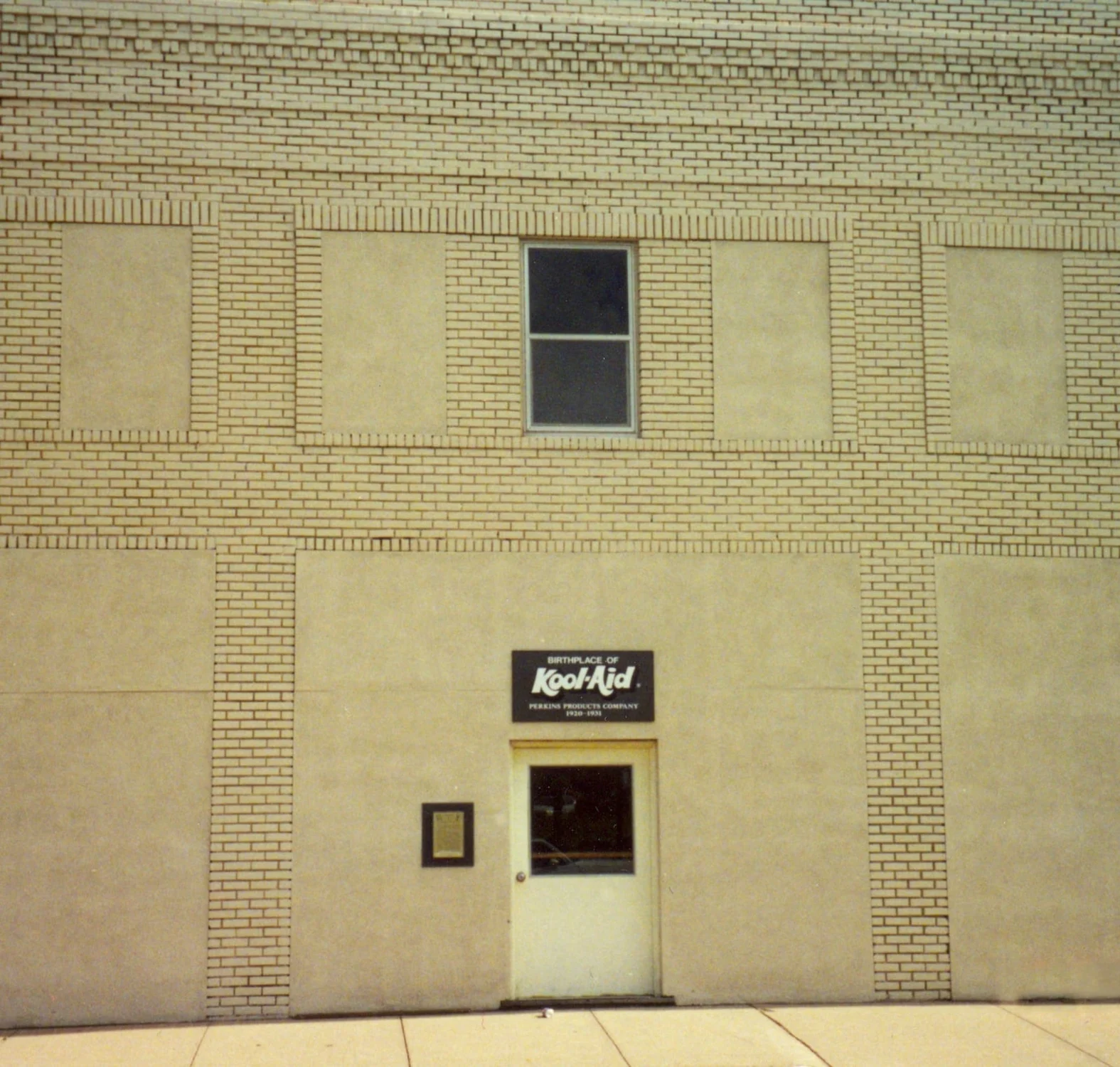
The former Perkins building survives in downtown Hastings, and the Hastings Museum tells the history of the business in its Kool-Aid exhibit. The museum’s account follows Perkins’s business from Nebraska to its later expansion, including the early formula and the packaging work done in Hastings.
Keep exploring
Take these stories with you.
Open Hidden Here to see the stories around you. Choose a place on the map, read what happened there, or listen while you explore. Optional nearby alerts can point out stories you might otherwise miss.
Discover thousands of stories across the U.S.
Create a free account to read the full stories and listen to five of them. Passport adds unlimited listening.
 See how Hidden Here works

Sources & photograph
Adapted from the Hidden Here story catalog. Explore the historical records behind this story.